A comedo is a clogged hair follicle (pore) in the skin.[2] Keratin (skin debris) combines with oil to block the follicle.[3] A comedo can be open (blackhead) or closed by skin (whitehead) and occur with or without acne.[3] The word "comedo" comes from the Latin comedere, meaning "to eat up", and was historically used to describe parasitic worms; in modern medical terminology, it is used to suggest the worm-like appearance of the expressed material.[1]
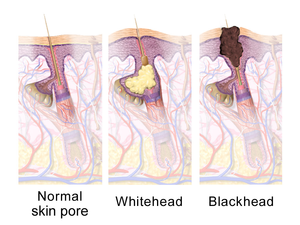
The chronic inflammatory condition that usually includes both comedones, inflamed papules, and pustules (pimples), is called acne.[3][4] Infection causes inflammation and the development of pus.[2] Whether a skin condition classifies as acne depends on the number of comedones and infection.[4] Comedones should not be confused with sebaceous filaments.
Comedo-type ductal carcinoma in situ (DCIS) is not related to the skin conditions discussed here. DCIS is a noninvasive form of breast cancer, but comedo-type DCIS may be more aggressive, so may be more likely to become invasive.[5]
Causes
Oil production in the sebaceous glands increases during puberty, causing comedones and acne to be common in adolescents.[3][4] Acne is also found premenstrually and in women with polycystic ovarian syndrome.[3] Smoking may worsen acne.[3] Transgender men reported to experience increased acne during the first year of testosterone treatment, peaking at the 6-month mark; acne then subsided without significant long-term effects for 93.9% of participants in the study.[6][7]
Oxidation rather than poor hygiene or dirt causes blackheads to be black.[2] Washing or scrubbing the skin too much could make it worse, by irritating the skin.[2] Touching and picking at comedones might cause irritation and spread infection.[2] What effect shaving has on the development of comedones or acne is unclear.[2]
Some skin products might increase comedones by blocking pores,[2] and greasy hair products (such as pomades) can worsen acne.[3] Skin products that claim to not clog pores may be labeled noncomedogenic or nonacnegenic.[8] Make-up and skin products that are oil-free and water-based may be less likely to cause acne.[8] Whether dietary factors or sun exposure make comedones better, worse, or neither is unknown.[3]
A hair that does not emerge normally, an ingrown hair, can also block the pore and cause a bulge or lead to infection (causing inflammation and pus).[4]
Genes may play a role in the chances of developing acne.[3] Comedones may be more common in some ethnic groups.[3][9] People of Latino and recent African descent may experience more inflammation in comedones, more comedonal acne, and earlier onset of inflammation.[3][9]
Pathophysiology

Comedones are associated with the pilosebaceous unit, which includes a hair follicle and sebaceous gland. These units are mostly on the face, neck, upper chest, shoulders, and back.[3] Excess keratin combined with sebum can plug the opening of the follicle.[3][10] This small plug is called a microcomedo.[10] Androgens increase sebum (oil) production.[3] If sebum continues to build up behind the plug, it can enlarge and form a visible comedo.[10]
A comedone may be open to the air ("blackhead") or closed by skin ("whitehead").[2] Being open to the air causes oxidation, which turns it black.[2] Cutibacterium acnes is the suspected infectious agent in acne.[3] It can proliferate in sebum and cause inflamed pustules (pimples) characteristic of acne.[3] Nodules are inflamed, painful, deep bumps under the skin.[3]
Comedones that are 1 mm or larger are called macrocomedones.[11] They are closed comedones and are more frequent on the face than neck.[12]
Solar comedones (sometimes called senile comedones) are related to many years of exposure to the sun, usually on the cheeks, not to acne-related pathophysiology.[13]
Management
Using nonoily cleansers and mild soap may not cause as much irritation to the skin as regular soap.[14][15] Blackheads can be removed across an area with commercially available pore-cleansing strips (which can still damage the skin by leaving the pores wide open and ripping excess skin) or the more aggressive cyanoacrylate method used by dermatologists.[16]
Squeezing blackheads and whiteheads can remove them, but can also damage the skin.[2] Doing so increases the risk of causing or transmitting infection and scarring, as well as potentially pushing any infection deeper into the skin.[2] Comedo extractors are used with careful hygiene in beauty salons and by dermatologists, usually after using steam or warm water.[2]
Complementary medicine options for acne in general have not been shown to be effective in trials.[3] These include aloe vera, pyridoxine (vitamin B6), fruit-derived acids, kampo (Japanese herbal medicine), ayurvedic herbal treatments, and acupuncture.[3]
Some acne treatments target infection specifically, but some treatments are aimed at the formation of comedones, as well.[17] Others remove the dead layers of the skin and may help clear blocked pores.[2][3][4]
Dermatologists can often extract open comedones with minimal skin trauma, but closed comedones are more difficult.[3] Laser treatment for acne might reduce comedones,[18] but dermabrasion and laser therapy have also been known to cause scarring.[11]
Macrocomedones (1 mm or larger) can be removed by a dermatologist using surgical instruments or cauterized with a device that uses light.[11][12] The acne drug isotretinoin can cause severe flare-ups of macrocomedones, so dermatologists recommend removal before starting the drug and during treatment.[11][12]
Some research suggests that the common acne medications retinoids and azelaic acid are beneficial and do not cause increased pigmentation of the skin.[19] If using a retinoid, sunscreen is recommended.
Rare conditions
Favre–Racouchot syndrome occurs in sun-damaged skin and includes open and closed comedones.[20]
Nevus comedonicus or comedo nevus is a benign hamartoma (birthmark) of the pilosebaceous unit around the oil-producing gland in the skin.[21] It has widened open hair follicles with dark keratin plugs that resemble comedones, but they are not actually comedones.[21][22]
Dowling–Degos disease is a genetic pigment disorder that includes comedo-like lesions and scars.[23][24]
Familial dyskeratotic comedones are a rare autosomal-dominant genetic condition, with keratotic (tough) papules and comedo-like lesions.[25][26]
| This article uses material from the Wikipedia article Metasyntactic variable, which is released under the Creative Commons Attribution-ShareAlike 3.0 Unported License. |